

Rare Vinyl Pressings Worth Money: A Collector's Guide
· 15 min read
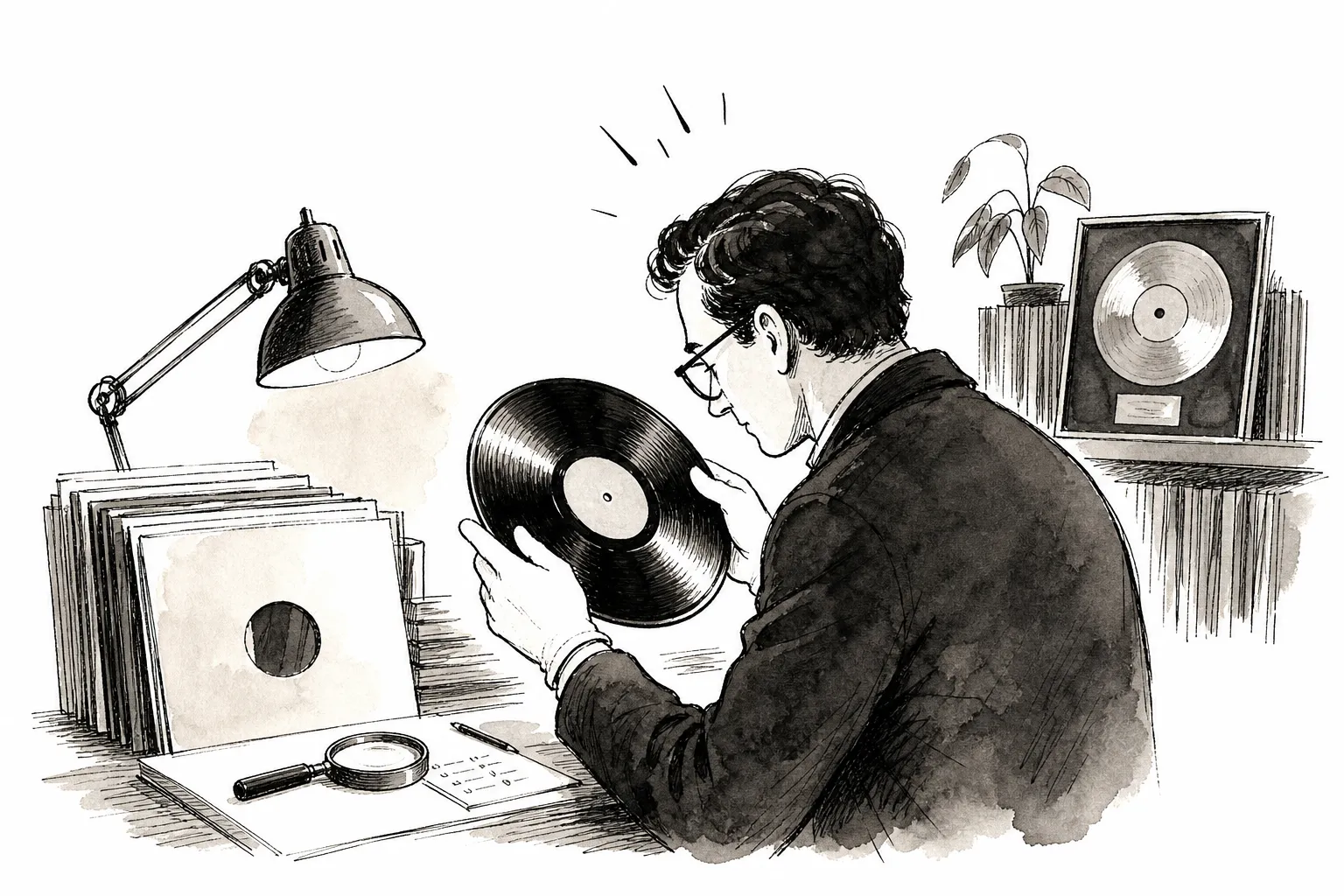
You know the feeling. You're flipping through a dusty crate at the thrift store, and something makes you stop. The cover looks right. The label color looks right. Your gut says "hold on." But is this a $15 spin or a $1,500 score? Knowing how to identify rare vinyl pressings worth money is what separates a lucky guess from a confident find.
The stakes are real. The Beatles' White Album serial #000001 sold for $790,000 at auction. A Bob Dylan test pressing fetched $1.77 million in 2022. John Lennon and Yoko Ono's Double Fantasy, found at the scene of Lennon's murder, sold for $850,000. These aren't flukes. They're the result of specific, learnable factors that separate a common reissue from a genuinely collectible LP worth serious money.
Those four factors are pressing type, scarcity and demand, condition grade, and authentication markers. Once you understand each one, you can size up almost any record in minutes. Tools like VinylDeck even pull live Discogs market data and instantly place any pressing on a five-tier rarity scale, from Common all the way up to Grail, so you're not doing the math by hand every time.
Rare vinyl pressings worth money: the pressing types that drive serious collector prices
Not all records are equal, even when they share the same title, artist, and album art. The physical history of how and when a record was manufactured determines most of its market value. Two copies of the same album can differ by hundreds of dollars, and the pressing type is usually the first reason why.
Original first pressings: the gold standard for collectible LPs
A first pressing is the initial commercial run cut directly from the original lacquer, made using the earliest stampers closest to the master tape. Every subsequent pressing introduces generational loss, additional wear on the tooling, and sometimes entirely different mastering decisions. That proximity to the source is what collectors are paying for.
Beatles albums on UK Parlophone, Blue Note jazz records on original labels, and early Pink Floyd on Columbia are classic targets. For the Parlophone Beatles releases, the specific label design tells the story: the 1962, 1963 pressings used a black label with gold text, transitioning to a black background with a bright yellow Parlophone logo and silver print by summer 1963. These details matter. Depending on artist and condition, first pressings in classic rock, jazz, and hip-hop sell anywhere from $200 to several thousand dollars, making them some of the most reliable rare vinyl pressings worth money that you'll encounter in the wild.
Test pressings, acetates, and promo copies
Test pressings are pre-release lacquers made to check audio quality before mass production begins. Typically only a handful to a few dozen copies exist per title, the exact number varies by label and era, which makes them some of the scarcest records on earth. Acetates are one-off dubplates, often cut for a single artist or radio station. Promo copies are stamped "Not for Sale" and distributed to press and radio before general release.
Elvis Presley's Sun Studio acetate sold for $300,000 when Jack White purchased it in 2015. That number reflects a combination of extreme scarcity, historical significance, and provenance: only one copy existed, and it captured Elvis before he was Elvis. That's the kind of premium you see when all the rarity factors stack up at once.
Limited-numbered runs, misprints, and regional releases
Withdrawn pressings carry their own collector logic. The Beatles' "Butcher Cover" for Yesterday and Today, recalled shortly after release, has sold for over $125,000 at auction, with John Lennon's personal copy fetching $233,511 in 2019 and a sealed first-state copy reaching $112,500 as recently as 2024. More common VG+ examples still trade in the $500 to $800 range. Misprints work similarly: when a manufacturing error is unique, discoverable, and documented, it creates unintentional scarcity that drives prices up. For contemporary auction coverage of the Butcher Cover sales, see Beatles Butcher Cover LP auction coverage.
Regional releases add another layer of complexity. UK originals frequently command premiums over their US equivalents on the secondary market, not necessarily because they sound dramatically better, but because collector culture in those regions produced careful, well-maintained copies that survived in better condition. Japanese pressings are more variable: while some audiophile releases from labels like Toshiba-EMI are prized for their pressing quality, they do not consistently outprice US originals on current Discogs data, so research each title individually before assuming a Japanese pressing carries a premium.
The four factors that set a record's market price
Understanding why two copies of the same album can differ by hundreds of dollars comes down to four specific variables. The title on the spine is almost irrelevant, it's what's pressed into the vinyl and how well it survived that drives record valuations.
Scarcity and demand: the have/want ratio explained
Discogs tracks how many collectors own a pressing versus how many want it, and that ratio is the clearest real-world signal of collector demand. A record with 200 owners and 600 people actively wanting it sits in a very different position than one with 40,000 owners and 8,000 wants. The first creates market tension and upward price pressure; the second is essentially a buyer's market.
This ratio is the backbone of how VinylDeck assigns rarity grades. Rather than gut feel or reputation alone, the grading system processes real have/want data from Discogs and places each pressing on a five-tier scale: Common, Uncommon, Rare, Ultra Rare, and Grail. That's credible gamification built on actual market data, not cosmetic decoration.
Label variations and matrix numbers that quietly change everything
Major labels like Columbia, Parlophone, and Decca changed their label designs over decades, and those design changes serve as rough date stamps. The runout groove holds more precise information: matrix codes etched into the dead wax identify the specific lacquer generation used to cut the pressing. Earlier generations command higher prices because they're closest to the master. The first matrix cut (designated A1/B1 or similar) is always more desirable than a second or third generation (A2/B2).
One of the quickest checks a collector can run is distinguishing hand-etched matrix codes from machine-stamped ones. Hand-etched codes are characteristic of original pressings and show visible variation in depth and character. Machine-stamped codes are uniform and typically indicate a reissue or later pressing. That distinction alone filters out a significant percentage of reissues on sight.
Why condition acts as a price multiplier, not just a discount
Condition doesn't just trim a little off the top of a record's value. It restructures the entire price. A Near Mint copy holds 90 to 95% of Mint value. VG+ drops to 50 to 65%. VG falls to 30 to 40%. Good condition records typically recover only 10 to 20% of peak value, and Poor copies are essentially unsellable at meaningful prices.
Goldmine estimates that only 2 to 4% of records from the 1950s and 1960s survive in Near Mint condition. That scarcity of condition alone makes even common titles worth real money when they surface in NM. One often-overlooked factor: sleeve condition adds 20 to 40% to total value. A pristine original inner sleeve on a first pressing is not just nice to have, it's a significant chunk of the final sale price.
How to spot rare vinyl pressings worth money: authentication from runout to jacket
Authentication is the skill that separates a confident collector from one who keeps mistaking reissues for originals, and paying for the confusion either way. These checks take minutes once you've run them a few dozen times.
Reading the runout groove: your first authentication checkpoint
The runout groove is the silent area between the last track and the label. It contains the matrix code, the lacquer-cut engineer's initials, and mother/stamper numbers. George Peckham's famous "Porky Prime Cut" inscription is one of the best-known examples of engineer signatures that help authenticate specific pressings. Robert Ludwig's "RL" initials in a runout groove are similarly recognizable to classic rock collectors. For an illustrated look at how engraving and matrix numbers appear in the dead-wax, see this guide to engraving and matrix numbers in the dead wax.
Once you've read the matrix code, cross-reference it against the pressing entries on Discogs. The database lists the expected matrix details for confirmed original pressings of most major releases, giving you a factual baseline to compare against what's actually etched in the groove.
Label and jacket checks that reveal reissues fast
Counterfeit and reissue labels share a set of common tells: slightly blurry text, incorrect font weights, misplaced logos, and color tones that don't match the era. On the jacket side, look for pixelated cover art, a glossy finish where originals were matte, missing legal text, or catalog numbers that don't appear in official label archives.
For records where a signature adds significant value, UV light helps detect added signatures or paper alterations. Vinyl weight is a secondary clue: genuine older pressings often feel more substantial than some modern reissues or later counterfeit pressings, though this isn't definitive on its own. Use it alongside label and matrix checks, not as a standalone test. If you want a short checklist for spotting fakes and reissues, this collector's guide is a good starting point: how to spot fake or reissued vinyl records.
Condition grading and what each grade costs you in resale value
Grading is applied separately to the vinyl and to the sleeve, then considered together when pricing. That means a record in VG+ condition with a Near Mint sleeve sits in a different market position than the same record with a Good jacket, even if the playing surface is identical.
The standard Goldmine/Discogs scale breaks down like this:
- Mint (M): Unplayed, flawless. 100% of peak value.
- Near Mint (NM): Essentially perfect with minimal signs of handling. 90 to 95%.
- Excellent (EX): Light signs of play, still sounds great. 70 to 80%.
- Very Good Plus (VG+): Light surface marks, plays cleanly. 50 to 65%.
- Very Good (VG): Noticeable marks, some surface noise. 30 to 40%.
- Good (G/G+): Heavy wear, plays with significant noise. 10 to 20%.
The most common grading mistakes collectors make are overgrading the record while undergrading the sleeve (or the reverse), and confusing surface noise from dust with genuine playing wear. Cleaning a record before grading is not optional if you want an accurate read. For a deep primer on grading conventions and how condition affects value, see this vinyl record grading guide.
Lighting matters enormously: grade under a bright directional lamp that rakes across the surface at a low angle, showing every mark clearly. Overhead room lighting hides scratches that buyers will absolutely find when they get the record home.
Figuring out where your pressing sits on the rarity spectrum
Knowing which factors drive high-value vinyl sales is one thing. Applying that knowledge to the specific record in your hands, quickly, accurately, and without a spreadsheet, is the actual skill.
Using Discogs data as your baseline valuation tool
Start by identifying your specific pressing on Discogs: match the label design, catalog number, country of origin, and matrix code to the correct entry in the database. From there, check the sale history to see what copies have actually cleared, not just what sellers are asking. "Last sold" prices reflect real transactions; median prices smooth out outliers and give you a reliable middle ground for decision-making. For a step-by-step walkthrough on identifying rare pressings, see How to tell if a vinyl record is rare (and what it's actually worth) · VinylDeck.
The have/want ratio sits right on the pressing page and tells you at a glance whether demand is strong or whether supply comfortably exceeds it. Cross-referencing multiple data points manually is doable, but it takes time, especially when you're standing in a record store or at a fair with a line forming behind you.
VinylDeck's five-tier rarity scale: instant context for any pressing
This is exactly the problem VinylDeck, your vinyl collection, graded like a card deck was built to solve.
When you add a record to your VinylDeck collection, the app pulls live Discogs have/want data and processes it into an immediate rarity grade: Common, Uncommon, Rare, Ultra Rare, or Grail. The pack-reveal mechanic flips the card to show you the result, which sounds like a fun detail until you realize it's doing meaningful valuation homework in real time.
Picture the crate-digging scenario from the top of this article. You find something at a record fair that looks interesting. You add it to VinylDeck on your phone. The card flips. Grail tier. Now you know what you're holding before you've even haggled over the price. That's the difference between browsing and hunting with information.
Where to sell your valuable pressings and what fees to expect
A confirmed valuable pressing is only half the equation. Where you sell it determines how much of that value you actually keep, and the spread between platforms can be significant enough to matter on high-value vinyl sales.
eBay auctions vs. Discogs fixed-price: when to use each
eBay auctions historically deliver higher final prices on genuinely rare records because competitive bidding regularly exceeds what any single buyer would commit to in a fixed-price environment. Total fees on eBay run approximately 15.8% when you combine the final value fee and payment processing. Discogs suits sellers who want reliable collector traffic and lower combined fees around 10.9%, and the built-in pressing data helps buyers trust a listing without requiring extensive seller description work.
The decision rule is straightforward. Use eBay for records where a bidding war is plausible: clear first pressings, test pressings, withdrawn copies, anything with documented scarcity. Use Discogs for well-documented pressings where the collector market is active and you'd rather move inventory at a fair price than wait for auction dynamics to play out.
Heritage Auctions and specialist dealers for ultra-rare items
Heritage Auctions targets the serious end of the collector market and has documented results like a 1962 Beatles pressing selling for $30,000. Their current consignment rates run 25 to 30% for standard lots, though terms are negotiable for high-value consignments, some auction agreements have come in at 10 to 15% for premium items. Get the fee structure in writing before you commit. Specialist dealers add provenance expertise and a pre-qualified buyer network, generally pricing 10 to 20% above Discogs median to offset their overhead.
When provenance is a meaningful part of the value, a specialist or auction house consistently outperforms any open marketplace. A sealed copy still in original shrink wrap, a record with documented artist ownership, or a pressing with documented historical significance all belong in an environment where buyers understand what they're bidding on and expect to pay accordingly.
You now know more than most collectors in the room
Genuinely rare vinyl pressings worth money turn up in everyday collections more often than most people expect. The knowledge is the unlock, not access to some secret inventory. Once you know what a Grail-tier have/want ratio looks like, you start recognizing it in the wild. Once you know what a hand-etched matrix code looks like versus a machine-stamped one, you stop second-guessing yourself at the record store.
Here's the checklist that matters: pressing type, scarcity and demand ratio, condition grade, and authentication markers. Run those four checks on any record and you have a defensible read on its market position. That's the framework that separates a collector who gets lucky from one who finds rare vinyl pressings worth money consistently.
VinylDeck is the fastest way to put all of this into practice. Add any record, see its rarity grade drawn from live market data, log your spins, and build the visual picture of what your collection actually contains. You might already own something extraordinary and not know it yet. That's worth finding out.
Frequently asked questions
How do I know if my vinyl pressing is worth money?
Check four things: pressing type (original first pressing vs. reissue), scarcity using Discogs have/want data, condition grade, and authentication markers like hand-etched matrix codes and correct label design for the era. Apps like VinylDeck pull live Discogs data and place your pressing on a rarity scale instantly, so you don't have to cross-reference everything manually. For a step-by-step guide to identifying rare pressings, read How to tell if a vinyl record is rare (and what it's actually worth) · VinylDeck.
What makes rare vinyl pressings worth money?
The combination of scarcity, demand, condition, and verifiable authenticity drives record valuations. A first pressing in Near Mint condition with strong Discogs want data will always command a premium over a later pressing in average shape. Provenance, a documented history of ownership or a notable origin, can push prices even higher.
Are Japanese pressings more valuable than US originals?
Not consistently. Some Japanese audiophile pressings are prized for sound quality, but they don't reliably outprice US originals on Discogs. Always research the specific title and pressing rather than assuming a regional premium exists.
Where is the best place to sell a rare record?
It depends on how rare the record is. eBay auctions work best when genuine bidding competition is likely, test pressings, withdrawn copies, or clear first pressings in top condition. Discogs fixed-price listings suit well-documented pressings with active collector demand and lower combined fees (around 10.9%). For truly high-value vinyl, Heritage Auctions or a specialist dealer provides access to buyers who understand provenance and will pay accordingly.