

First vinyl records to buy: genre picks for beginners
· 12 min read
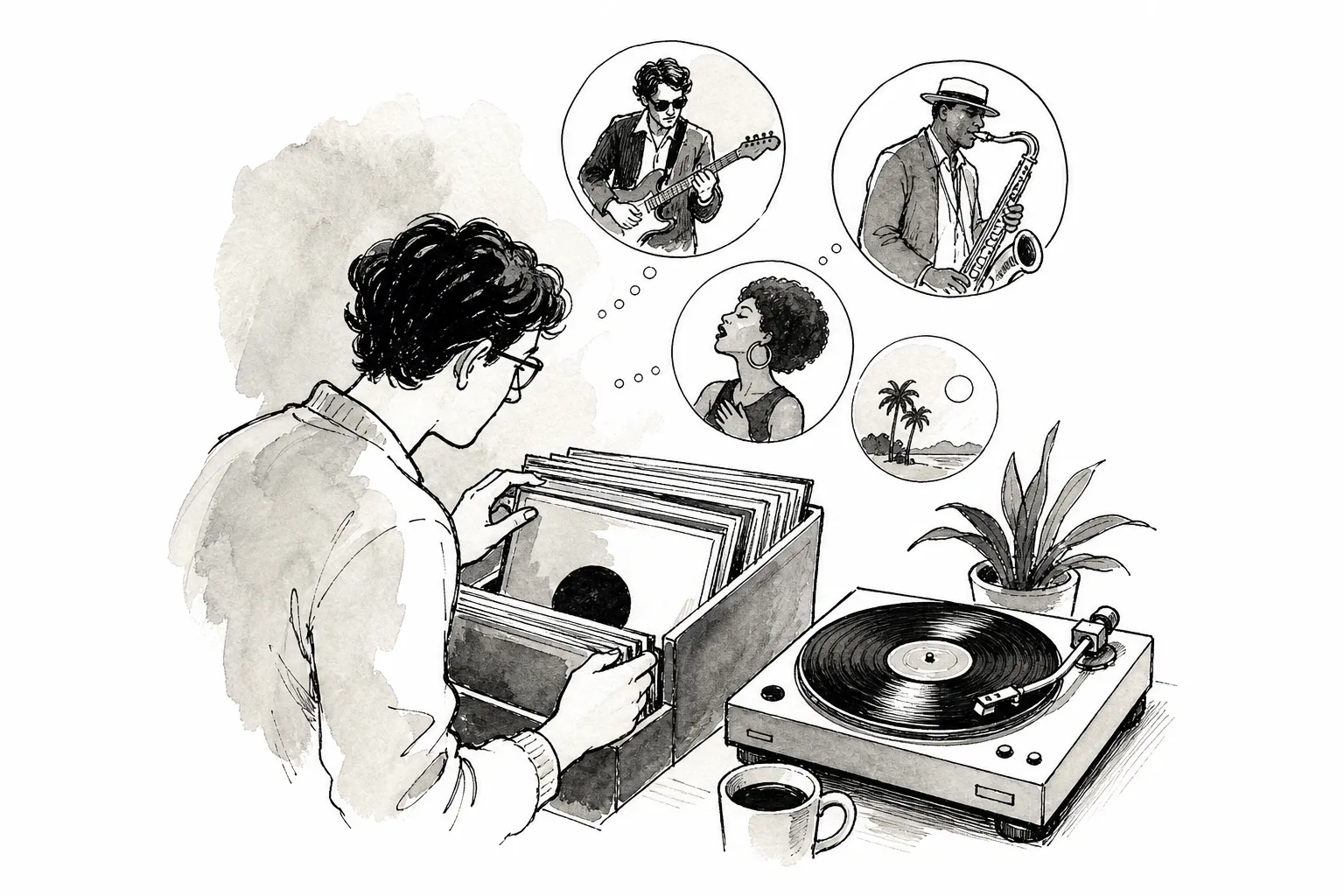
Picture this: you're standing in a record store for the first time, flipping through bins, completely lost. Albums you half-recognize. Genres you can't place. Price stickers that range from two dollars to "are you serious." Every collector you'll ever meet has stood exactly where you're standing right now, a little overwhelmed and a little thrilled, trying to decide where to begin.
If you're wondering which first vinyl records to buy, the short answer is: start with the genre that already lives in your chest. The first record you take home marks the start of something that tends to quietly take over your life, in the best possible way. Vinyl rewards patience and curiosity, and your taste will sharpen with every spin. The goal right now isn't to build a perfect collection. It's to build your collection, record by record.
This guide covers the practical stuff: which albums to start with across genres, which pressings to actually buy, where to shop and what things cost in 2026, and how to protect what you bring home. These are the must-have vinyl albums that work as both great records and smart first purchases. Once you have 10 or more records stacked up, you'll also want somewhere to track them that makes the hobby feel as exciting as it actually is. That's exactly what VinylDeck does, and we'll get there.
First vinyl records to buy, genre-by-genre picks for your starter collection
The albums below aren't just critically acclaimed. They're beginner record recommendations chosen because they reward vinyl specifically, records where the format does something streaming can't quite match. Start here, then branch out once you know what draws you in.
Rock: first vinyl records to buy for beginners
Fleetwood Mac's Rumours is the standard recommendation for a reason: the vocal harmonies, the emotional weight of the songwriting, and the analog warmth of the production are all things you feel more on wax than through earbuds. Pink Floyd's The Dark Side of the Moon is another essential, with stereo imaging and dynamic range that genuinely benefit from a turntable. Led Zeppelin IV rounds out the trio as a record with real physical presence, the kind of low-end thump that makes vinyl worth owning.
These three also happen to be easy to find. Common titles in good condition show up in used bins regularly, which matters when you're figuring out the format on a budget. As starter vinyl records go, they're about as forgiving and rewarding as it gets.
Jazz and soul picks that prove what vinyl was made for
Miles Davis's Kind of Blue is the jazz entry point most collectors recommend without hesitation. It's unhurried and deeply atmospheric, the kind of record that sounds different at midnight than it does at noon. John Coltrane's A Love Supreme follows naturally once you've spent time with Miles, and Marvin Gaye's What's Going On bridges soul and jazz in a way that reveals new texture every time you put it on.
Soul records tend to have layered arrangements that can feel compressed in typical streaming playback. Many listeners find that vinyl emphasizes the orchestral and timbral detail those arrangements contain. The Motown orchestration on What's Going On is a good example: details you've never quite noticed will suddenly be audible in a way that makes the record feel new again.
Pop and electronic albums worth owning on wax
Pop belongs on vinyl. Adele's 21 is proof, an album where the vocal production is rich enough to justify the format all on its own. Norah Jones's Come Away With Me offers similar warmth, especially the Blue Note audiophile edition if you find it reasonably priced. Radiohead's In Rainbows sits at the intersection of rock, electronic, and ambient, and it demonstrates how vinyl handles textured, layered production in a way digital formats rarely match.
New pressing vs. used vinyl: what beginners actually need to know
You don't need to become a pressing expert in your first year. But a few basics will keep you from overspending on records that disappoint or underspending on things worth the extra few dollars.
When a modern reissue is the smarter buy
For most beginners, a modern reissue is the right call. They're easier to find, reasonably priced, and you don't need a trained eye to evaluate them. Labels worth trusting include UME reissues and recent Rhino High Fidelity releases, both of which have strong track records for quality and value among new collectors. The 2024 Talking Heads Stop Making Sense remaster is a good example of a reissue that actually outperforms the original, which is the exception to the rule, but a useful one to know about.
You'll hear a lot about 180g vinyl as a quality marker, and it does generally signal a more carefully pressed record. It's worth knowing about, but it's not something you need to chase obsessively at this stage. A well-mastered standard-weight pressing beats a poorly mastered 180g every time.
What to look for on the sleeve before you buy
When shopping used, pay attention to the label name, country of pressing, and pressing details on the sleeve or inner label. An original UK pressing of a classic jazz album can sound noticeably different from a budget reissue, and knowing how to read basic sleeve information will tell you which you're holding. That said, this level of detail is genuinely a year-two concern. For now, focus on condition: inspect the record for deep scratches, check the sleeve for dampness or mold, and trust your gut.
Where to buy your first records and what each option costs you
There are four realistic buying options for new collectors in 2026, and each one makes sense in a different situation.
Local record stores and Discogs: the two home bases for new collectors
Local stores win on experience. You can inspect records before buying, ask staff for recommendations, and leave with something in hand the same day. Used bins at local shops often run $1 to $10 for common titles, while records displayed on the wall or in staff-curated sections tend to run higher, typically in the mid-teens to $30 range. The selection is limited by whatever the store has in stock, but for learning the format, that constraint is actually useful.
Discogs is the other essential tool. It gives you access to nearly every record ever pressed, with price transparency built in: you can see what a record has sold for historically, compare seller grades, and find used copies in good condition for $5 to $20 depending on the title. Discogs grading requires a little learning (VG+, NM, and so on), but it pays off quickly. The general advice: start local to build confidence with the physical format, then move to Discogs once you know what condition to look for.
If you want to learn how to tell if a vinyl record is rare (and what it's actually worth), that article walks through the key signals collectors use when evaluating scarcity and value.
Bandcamp and retail chains: when they actually make sense
Bandcamp is the right place to buy directly from artists and independent labels, especially for exclusive pressings or colored vinyl variants you won't find anywhere else. If you're drawn to newer or independent music, it's worth bookmarking. Target and Walmart carry new releases at competitive prices and occasionally have store-exclusive color variants worth picking up. Just be cautious with third-party sellers on Walmart's site, since packaging quality varies and records can arrive damaged. Think of these retail channels as supplements to your local store and Discogs habit, not replacements.
For curated retail recommendations and shopping outlets, Rolling Stone's guide to where to buy vinyl records is a helpful companion to the options described above.
Building a realistic starter budget (and tracking your collection as it grows)
What vinyl actually costs in 2026: new vs. used
Here's where things stand right now. New standard LPs average $25 to $35. Audiophile or double-LP editions run $40 to $55. Used records in good condition typically cost $5 to $20 depending on the title and where you're shopping. A realistic starter budget for your first 8 to 10 records is around $150 to $200 if you mix new and used strategically.
The practical approach: start with used copies of the classics to learn what the format feels like without a big upfront investment. A used copy of Kind of Blue in VG+ condition, which you can typically find for under $15 at a local shop or on Discogs, will teach you more about vinyl listening than an expensive audiophile pressing will at this stage. Once you know what you love and how the format works, then invest in premium pressings.
For a full step-by-step roadmap on getting started, see How to start a vinyl collection in 2026 without wasting money, which walks through budgeting, buying strategies, and sensible first gear choices.
How to track your growing library and stay motivated
Once you've got 10 or more records, keeping track of what you own (and what you want) starts to matter. That's where VinylDeck earns its place in the routine. It's a free app that turns your collection into a gamified card binder, pulling rarity data from Discogs to assign each record a grade: Common, Uncommon, Rare, Ultra Rare, or Grail. Every time you add a record, you get a pack-reveal card flip that shows you where it lands.
You can log every spin, which levels up your cards and surfaces "dusty gem" recommendations for records you've neglected. Beginners start at the "Needle Rookie" rank and climb through eight collector titles as their library grows. It's a way to make the early learning curve feel like progress rather than homework, and it's completely free with no ads and no credit card required.
Find more tips and in-depth articles on the VinylDeck Blog.
Keeping your new records in great shape from the start
Vinyl care sounds intimidating until you realize most of it comes down to three or four habits you build once and never think about again.
Storage habits that prevent warps before they start
Store records vertically, always. Flat stacking adds pressure that warps the records at the bottom over time. Keep them away from heat sources and direct sunlight, both of which warp vinyl and fade covers. Replace the paper inner sleeves most records come with using anti-static polyethylene sleeves, which prevent dust buildup and minor scratches between plays. A stable room temperature with humidity around 40 to 50 percent is the environment your collection wants, and that's generally just a normal living space.
For detailed advice on cleaning, restoration, and storage best practices, see Rough Trade's vinyl cleaning, restoration, and storage guide, which covers long-term care and preservation tips.
Cleaning and handling basics you can start today
Use a carbon fiber brush before every play. Run it gently along the grooves to lift surface dust and reduce static before the needle drops. Handle records by the edges and the center label only, keeping your fingers off the grooves where oils and skin cells cause real damage over time. For deeper cleaning when you pick up a used record, a damp microfiber cloth with distilled water (not tap water) works well before you invest in a dedicated cleaning kit. Clean your stylus regularly using a dedicated brush, dragging it gently toward you along the bristles. A clean stylus protects both your needle and your records.
Cambridge Audio also offers a practical guide on how to take care of your vinyl collection, with clear steps for routine maintenance and cleaning gear recommendations.
Your first records are just the beginning
You don't need 25 records on day one or a $3,000 turntable setup. Start with a few albums that genuinely excite you, buy them in the best condition your budget allows, and take care of what you bring home. The hobby compounds over time, and the collection you build in year three will look nothing like the one you start with today.
Keep the framework simple: use these first vinyl records to buy as your starting map, lean on modern reissues as the practical choice for most titles, treat local stores and Discogs as your two core buying venues, and build basic storage and cleaning habits that protect everything from day one. As your first records stack up, VinylDeck is the free way to turn that growing library into something you can celebrate, track, and keep building with real purpose.
Every record you add to the crate is proof the hobby is working. That's what this is supposed to feel like.
Frequently asked questions about buying your first vinyl records
How many records should a beginner start with?
Most collectors suggest starting with 5 to 10 records. That's enough variety to explore different genres and pressings without overwhelming your budget or your shelf space. Quality over quantity matters more at this stage than building a large collection quickly.
Is it better to buy new or used vinyl as a beginner?
Both have their place. Used records let you explore broadly for less money and build familiarity with grading and condition. New reissues offer reliability and are easier to evaluate. A good beginner strategy is to buy used copies of classic albums first, then invest in new pressings of records you love most.
What are the best first albums to buy on vinyl for someone with no idea where to start?
Fleetwood Mac's Rumours, Miles Davis's Kind of Blue, and Adele's 21 are three of the most recommended starter vinyl records across different genres. All three are widely available, easy to find used in good condition, and genuinely reward the format.
Do I need expensive equipment to enjoy vinyl?
No. A decent entry-level turntable in the $150 to $300 range is plenty to get started. The records themselves matter more than the gear at this stage, and your ear will develop long before you need to upgrade your setup.