Discogs or a dedicated vinyl app: which fits you best?
· 9 min read
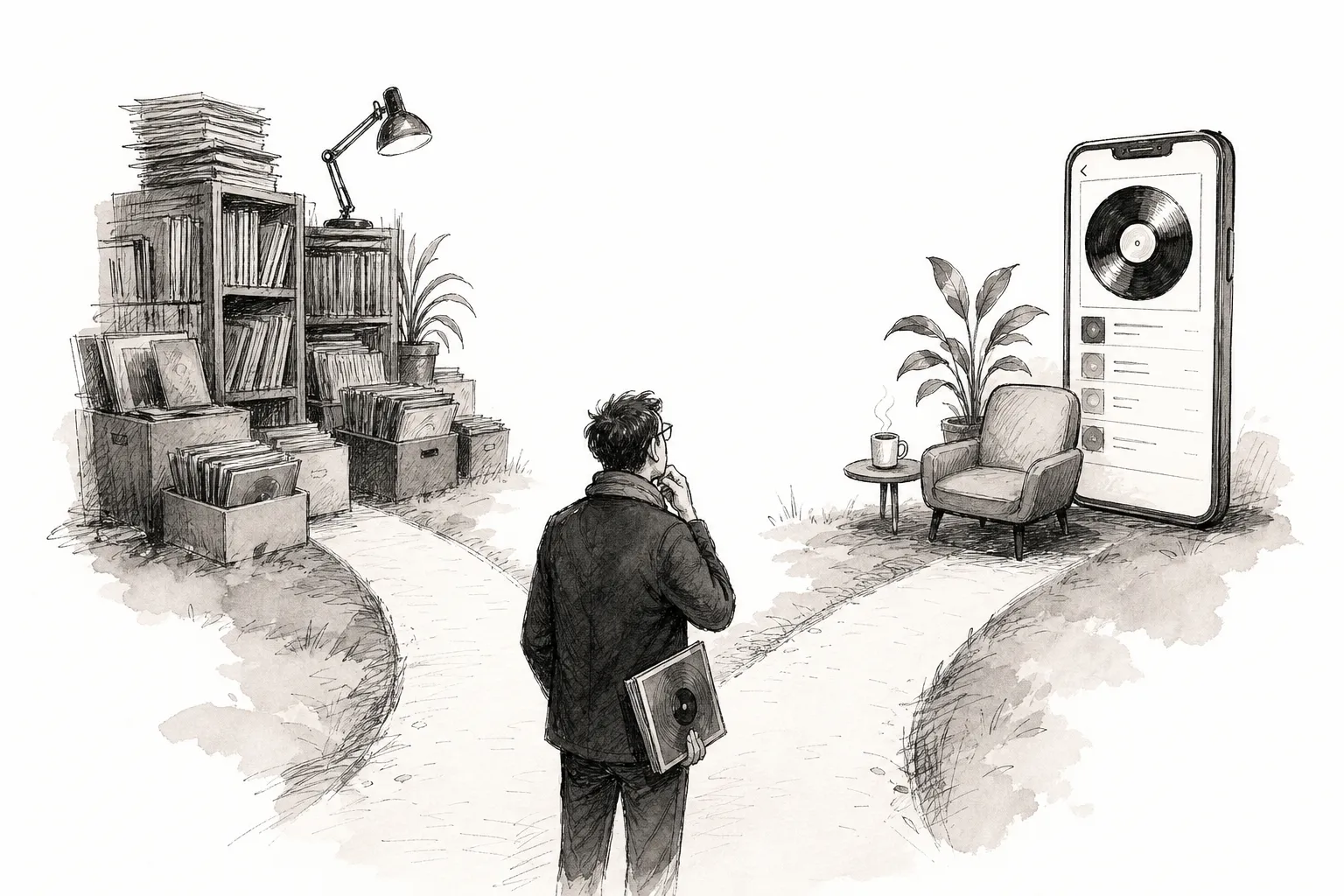
Should I use Discogs or a dedicated vinyl app to track my collection? Most vinyl collectors land on Discogs the same way. A friend recommends it, you create an account, and within an afternoon you've cataloged your first fifty records into a clean, sortable table. It works. The data is generally accurate, the pressing details are unmatched, and the marketplace is genuinely useful. But at some point, a lot of collectors look at their collection page and feel something strange: this doesn't feel like a hobby anymore. It feels like a spreadsheet.
That tension is worth paying attention to. Discogs and dedicated vinyl apps aren't solving the same problem. Discogs was built for the marketplace, for identifying and trading specific pressings with accuracy. Dedicated vinyl apps, like VinylDeck, were built for the experience of collecting: the browsing, the listening, the hunt, the feeling of holding something rare. Both tools are genuinely good. The question is which one fits how you actually collect.
The good news is that this rarely has to be an either/or decision. Many dedicated apps rely on Discogs data, so collectors often still reference Discogs even when using a vinyl collection tracker as their main interface. Understanding what each tool does best makes running both completely effortless, and the right setup can make your collection feel like a hobby again.
What Discogs genuinely gets right
Before comparing anything, Discogs deserves full credit for what it does. No other platform comes close to its pressing-level data. While most music databases catalog albums, Discogs catalogs specific releases: runout numbers, label variants, catalog numbers, country of origin. If you want to know whether you own the original UK pressing of Never Mind the Bollocks or a 1980s reissue, Discogs tells you exactly. That level of specificity is powered by a community-driven database of millions of releases, Discogs itself reports figures ranging well into the tens of millions, verified by collectors, not automated scrapers. The fact that apps like Record Scanner pull their metadata directly from Discogs says everything about its authority as a music database.
The marketplace and valuation tools are equally serious. Discogs shows minimum, median, and maximum sale prices pulled from actual transaction history for each specific pressing, not estimated values. Collectors can buy and sell directly through the platform on an 8% commission structure, with wantlist alerts that notify you the moment a record you've been hunting gets listed. For collectors who monitor the market regularly, these aren't nice-to-have features. They're the entire reason to show up. If you're new to using Discogs pricing as a valuation tool, a concise guide to pricing vinyl on Discogs can be helpful in understanding median versus recent sale prices.
On the organization side, Discogs gives you up to 1,000 custom folders, sorting by genre, format, catalog number, and condition notes. A June 2026 update added search by custom fields and catalog number, which made the collection tools noticeably sharper. The platform also functions as the connective tissue of the broader vinyl community: forums, release submissions, seller reviews, and collector discussions all live here. You're not just cataloging records; you're participating in a global knowledge base built by people who care as much as you do.
Should I use Discogs or a dedicated vinyl app to track my collection?
Dedicated apps approach your collection from a completely different angle. Instead of presenting your records as a sortable table, collection-first tools like VinylDeck reimagine them as a visual card binder, where each LP becomes a collectible card with its own rarity grade, condition badge, and play history. The shift sounds cosmetic, but it changes how you interact with your collection entirely.
Pack reveals and rarity grading
VinylDeck's pack reveal mechanic is a good example of what this category can do. When you add a record, the app triggers a card flip that assigns it a rarity grade drawn from Discogs demand signals, spanning tiers from common all the way up to genuinely scarce pressings. Collectors who've spent any time with trading card games recognize the feeling immediately, and it turns adding a new record from a data entry task into something that actually feels like a discovery. For collectors who came to vinyl through gaming or trading card culture, this framing clicks right away.
The rarity grading system earns its credibility because it comes from real signals. VinylDeck draws on Discogs have/want data, measuring how many collectors own a specific pressing versus how many are actively seeking it, to assign each tier. A Grail-level badge isn't arbitrary. It reflects genuine scarcity and demand rather than random scores or static metadata. The grades mean something because the data behind them is real.
Spin log and listening history
The spin log feature addresses something Discogs never set out to solve: listening. Discogs tracks what you own, not what you play. VinylDeck's spin log records each play and uses that history to surface "dusty gem" recommendations, records you own but haven't spun in a while. That's a fundamentally different philosophy from marketplace-first tools. The reward isn't for acquiring; it's for actually putting the needle down.
The real gaps on both sides
Neither tool is perfect, and being honest about that matters. On the Discogs side, the most obvious limitation for listening-first collectors is the complete absence of play tracking. There's no spin log, no play count history, no mechanism for rediscovering a record you bought three years ago and forgot about. The mobile app also requires a sync with your online account for full functionality, limiting offline use in the way that some dedicated cataloging apps handle naturally. For collectors who care about the experience of collecting more than the act of buying and selling, Discogs can drift toward feeling like inventory software.
Dedicated apps have their own honest limitations. No dedicated vinyl app has an independent database matching Discogs' scale. Several popular apps, VinylDeck included, use Discogs data as their backbone for metadata, cover art, and rarity signals. Marketplace access, seller history, and pressing-level verification still require going back to Discogs. This isn't a weakness to hide. It's actually the setup for understanding why using both tools together makes so much sense.
Why you don't actually have to pick one
One of the biggest barriers to trying a dedicated vinyl app is the fear of abandoning your existing Discogs work. VinylDeck addresses this with a Discogs collection import that pulls in your library, covers, release data, and all, so you don't rebuild anything from scratch. Your existing Discogs cataloging becomes the foundation for the new experience, not something you leave behind. Once imported, VinylDeck re-evaluates each record's rarity tier as Discogs demand data shifts, keeping your grades current without manual work. For a practical primer on collection workflows and management, see this guide to vinyl record collection management.
The practical workflow looks like this: use Discogs for buying, selling, verifying pressing details, and monitoring market prices. Use a vinyl collection tracker like VinylDeck for collection browsing, spin logging, rarity tracking, and building wishlists from full artist discographies. These aren't redundant activities. They serve different moments in the collecting lifecycle, one is transactional, the other is experiential. Running both is less like using two competing tools and more like having a warehouse and a display room: you need them for different reasons.
VinylDeck's free entry point makes testing this workflow genuinely low-risk. Sign up for VinylDeck, import your Discogs collection, and within a few minutes your records are already appearing as cards. If the format doesn't resonate, you've lost nothing. If it does, you've found a layer that makes your collection feel alive again. You can also explore stories and updates on the VinylDeck blog for tips and feature announcements.
How to match the tool to your collecting style
Most collectors fall into one of three profiles, and knowing which one you are makes the choice a lot clearer.
The marketplace collector buys and sells regularly, monitors pressing values, and wants to know exactly what a record is worth before listing it. Discogs is the primary tool for this workflow, full stop. Its marketplace integration, pressing data, and live pricing are built precisely for this use case. A dedicated app can complement the experience but isn't essential.
The hobby and listening-first collector owns somewhere between 50 and 500 records, spins regularly, and wants to rediscover what's already in the crate. This collector loves the hunt but isn't actively selling. A dedicated vinyl app like VinylDeck gives this profile the most engaging experience available: import from Discogs, log spins, chase rarity tiers, and let the dusty gem recommendations do their job. The Discogs app stays useful as a reference and wishlist tool in the background, but it's no longer the main interface for day-to-day browsing.
The serious crate digger is obsessed with scarcity, hunts specific pressings, and wants to know which records in their collection are genuinely hard to find. This collector benefits from using both tools with intention. Discogs handles pressing verification and marketplace scouting; VinylDeck's rarity tiers and wishlist builder organize and celebrate the hunt. When a top-tier rarity shows up in the binder, the achievement system acknowledges it in a way that a database row never quite does, which, honestly, is half the point of collecting in the first place. Want to see an example of a collector's binder in action? Check out @rexibu's vinyl collection · VinylDeck.
The right setup changes how collecting feels
Discogs and dedicated vinyl apps aren't competitors. They're different tools for different moments in the hobby, and the collectors who get the most out of both are the ones who stop treating the choice as binary. Discogs built the world's best pressing database and marketplace. Apps like VinylDeck built an experience layer on top of it. Used together, they cover the full spectrum of what collecting actually involves.
The Discogs import in VinylDeck makes running both completely effortless. Your data is already there; you're just changing how you interact with it. Instead of opening a spreadsheet every time you want to browse your collection, you open a card binder. Instead of scanning a table for what to play next, the spin log surfaces a record you forgot you loved.
If your collection has started to feel more like an obligation than a hobby, a dedicated record collection app might be exactly what changes that. Import your Discogs collection into VinylDeck (it takes a few minutes), and your records are already waiting on the other side as cards.