

Beginner Vinyl Collecting: How to Start Your Collection
· 11 min read
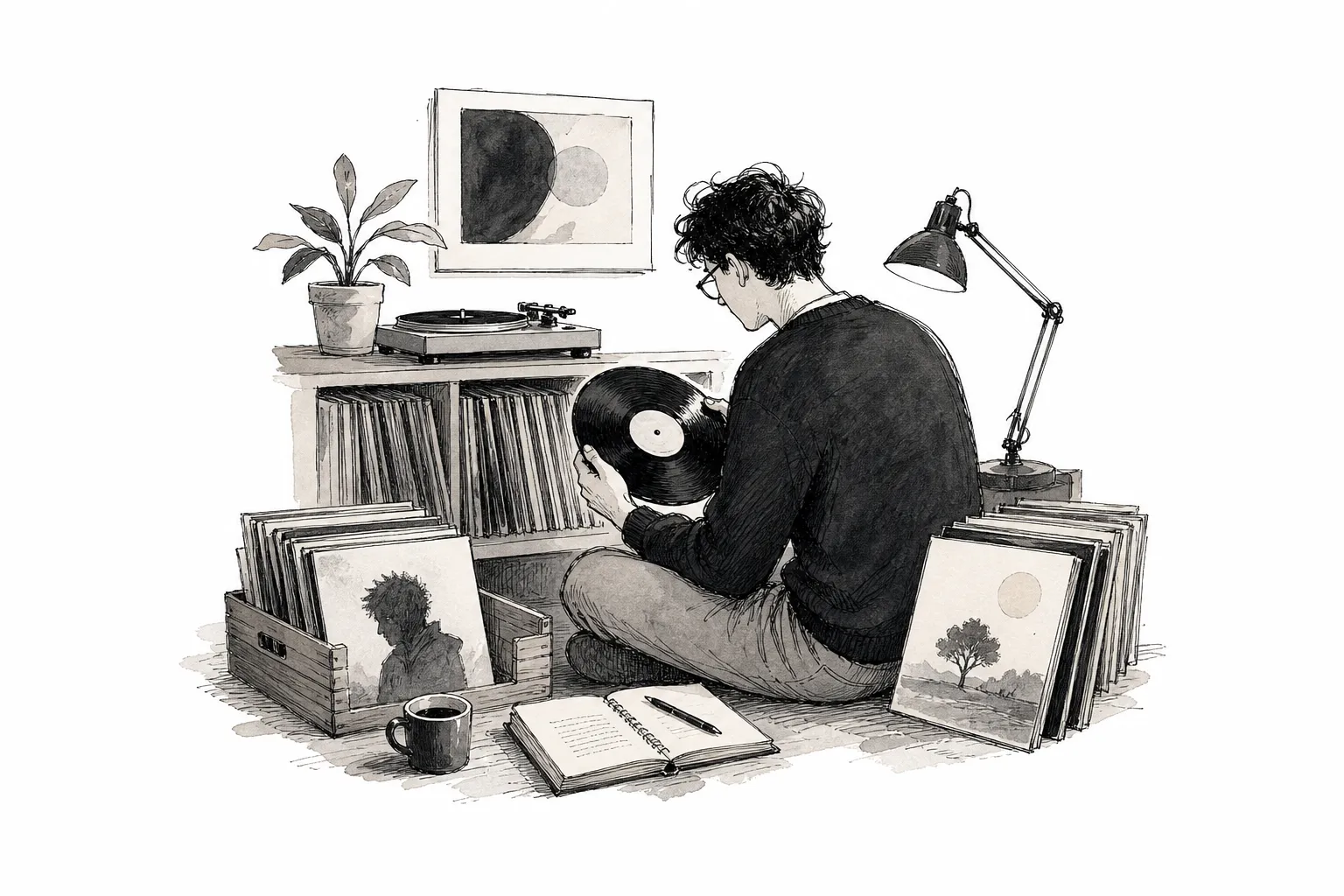
I bought my first record before I even owned a turntable. Nobody tells you what order to do things in. I stood there at the record store holding a copy of Rumours, completely confident in my purchase, with absolutely zero way to play it. Sound familiar? Starting a vinyl collection feels exciting and chaotic at the same time, and most beginner advice is either too vague ("just buy what you love!") or too deep in audiophile territory to be useful.
This beginner vinyl collecting guide fixes that. You'll walk away knowing exactly what gear to buy, where to find records, how to read condition grades, how to clean and store your collection, and how to grow it with intention rather than impulse. Think of it as going from Needle Rookie to a collector who actually knows what they're doing. There's a clear path here, and you're already on it.
Setting Up Your First Turntable Without Wasting Money
The gear question stresses beginners out more than it should. Here's the honest truth: you don't need an audiophile setup to fall in love with vinyl. You need a solid, balanced rig that won't destroy your records or your wallet.
The Two Beginner Setup Routes
The minimalist route pairs a turntable with powered (active) speakers and skips the external amplifier entirely. Budget: around $400 to $600 total. It's simple, it works, and you can plug everything in without worrying about matching amp power to speaker impedance. The traditional hi-fi route adds an integrated amplifier and passive speakers, landing closer to $600 to $900. It gives you more flexibility to swap components later, but it's genuinely more complex to set up. For most beginners, the minimalist route is the smarter starting point because it reduces setup friction and keeps costs predictable. You can always upgrade later.
What Each Component Actually Does
The turntable reads the grooves in the record and converts them into an audio signal. That signal is tiny, so it needs a phono preamp to amplify it to a usable level. Most entry-level turntables, including the Audio-Technica AT-LP60X at around $150 to $200, have a built-in phono preamp, which means you don't need to buy a separate one unless your amplifier lacks a phono input. The speakers (or powered speakers) are the last stop in the chain, turning that boosted signal into actual sound.
Cartridge quality matters more than most beginners expect. The built-in cartridges on entry-level tables are serviceable for getting started, but upgrading the cartridge is often the single highest-impact improvement you can make down the road.
The One Thing Beginners Get Wrong
A common mistake is dropping $300 on a turntable and then cutting corners with $50 speakers. A balanced setup sounds better than a flashy turntable running into poor speakers. A $500 total budget is a genuinely solid starting point for a system that will sound good and treat your records well. Start balanced, then upgrade one piece at a time as your ear develops.
Where to Find Records and What to Expect to Pay
Every buying source has a different vibe and a different risk profile. Knowing where to shop, and when, saves you money and frustration early on.
Starting at Your Local Record Store
Your local record store is the single best first stop for anyone following a beginner vinyl collecting guide. You can physically inspect records, ask staff questions, and sometimes play a record before you commit. Staff at independent stores genuinely love the hobby and are usually happy to help someone new. New LPs typically run $20 to $30; used records in dollar bins or discounted sections often cost a fraction of that. Introduce yourself as someone just starting out. You'll get better recommendations than any algorithm can offer.
Crate-Digging at Thrift Stores and Record Fairs
Thrift stores offer the lowest prices you'll find anywhere, usually $1 to $5 per record, but patience is the price you pay. You'll flip through a lot of damaged, unplayable records before finding something worth taking home. Record fairs sit in the middle: curated sellers, more unusual pressings, and prices ranging from $5 to $20 for used records. A few crate-digging tips: go early before the good stuff disappears, flip quickly through sleeves, and always pull the record out to inspect the vinyl before you hand over any money. Never judge by the cover alone.
When to Use Discogs and Other Online Sources
Online marketplaces are ideal when you're hunting a specific pressing you can't find locally. The main risk is buying a misgraded record you couldn't physically inspect. Check seller ratings carefully, read grading notes, and use Discogs' sales history feature to verify you're paying a fair price. If you're unsure how to interpret seller descriptions, consult Discogs' grading guide. A monthly budget of $50 to $100 keeps impulse buying under control while still giving you room to find great records consistently.
How to Read Record Condition Grades Before You Buy
Condition grades are the shared language of the vinyl world. Once you understand them, you can shop anywhere with confidence. This part of any vinyl collecting guide for beginners is worth memorizing early.
What the Grades Actually Mean (M to G)
The grading scale runs from perfect to barely playable, and each tier affects both sound quality and price significantly.
- Mint (M): Sealed perfection, factory-new, never played.
- Near Mint (NM): Plays flawlessly; you'll only see faint marks under direct light at the right angle.
- VG+: Minimal hairline scratches, plays cleanly with very little noise. This is the practical minimum for enjoyable listening.
- VG: Introduces audible crackle and surface noise throughout.
- Good (G): Noticeably degraded with prominent ticks and hiss across the whole side.
Think of VG+ as the floor, not the ceiling. Anything below that is a gamble you often lose. For another practical breakdown of condition grades and what to look for when evaluating sellers, see Groovv's vinyl record grading guide.
The Inspection Checklist Before Handing Over Your Cash
Hold the record under a bright light and tilt it at different angles. Scratches that would be invisible under flat lighting show up clearly when light skims across the surface. Check for warping by laying the record on a flat surface: even a slight warp can cause tracking problems. When possible, listen to the start, middle, and end of each side. The end-of-side grooves wear out first and will tell you a lot about how the record was treated. One more thing: dust and fingerprints can make a NM record look worse than it is. Always factor in whether the record just needs a good clean before you downgrade your assessment.
Cleaning and Storing Your Records the Right Way
Record care doesn't have to be complicated. A few consistent habits protect your collection for decades.
Three Cleaning Methods and When to Use Each
A carbon fiber brush before every play removes static and surface dust in a matter of seconds. It's the simplest, cheapest habit you can build. For fingerprints and surface grime, a wet cleaning kit (like GrooveWasher, or a DIY mix of distilled water and a small amount of isopropyl alcohol) handles what the dry brush can't; the setup costs approximately $20 to $40, though prices vary by brand and kit size. Ultrasonic cleaning is the deep-clean option, genuinely effective for heavily soiled records, but the machines are expensive and overkill for anyone just starting out. For product recommendations and solutions, check eCoustics' record cleaning solutions guide.
For most new collectors, a carbon fiber brush plus a wet kit covers everything. One non-negotiable rule: always use distilled water. Tap water deposits minerals directly into the grooves, and that damage is permanent.
Storage Rules That Prevent Long-Term Damage
Records must be stored vertically, never stacked flat. Stacking causes warping over time as the weight of records above presses down on those below. Keep them in a cool, dry space at around 65 to 70°F with humidity under 50%. Store them away from direct sunlight, which degrades both the vinyl and the album artwork. Replace original paper inner sleeves with anti-static polyethylene sleeves; standard paper inner sleeves can create friction that scratches the vinyl surface, and archival-grade polyethylene is the widely recommended alternative. Add outer plastic sleeves to protect your album covers from ring wear and moisture. For archival and handling recommendations, see industry best practices for vinyl records. Keep in mind that shelves have weight limits (around 30 lbs per 50 LPs), and records should never lean at sharp angles. These are simple habits, not a complicated system, and they'll keep your collection in great shape for years.
Understanding Pressings and Why Collectors Obsess Over Them
The same album can exist in dozens of different versions. Knowing the difference between them is what separates a casual listener from a collector who actually knows what they own.
What Makes One Pressing Different from Another
Original first pressings are cut from the master tapes shortly after an album's debut. They carry the mastering decisions the artist and producer approved, and many collectors seek them out for their sonic character. Reissues vary widely in quality: some are excellent, cut with modern equipment and better vinyl formulas; others are mastered from digital sources and can sound flat compared to the original. Beyond sound, scarcity matters. Limited colored vinyl runs, regional pressings, and early pressings in good condition are harder to find and more sought-after in the collector community. Understanding this is how the hobby goes from passive listening to active hunting.
How to Learn Pressing Scarcity Without Years of Trial and Error
This is exactly where VinylDeck comes in. Learn more about spotting valuable pressings in our guide on how to tell if a vinyl record is rare. According to VinylDeck, the app uses live Discogs have/want data to assign a rarity tier to every record in your collection across five grades, from Common all the way up to Grail. Instead of spending years building the instinct to recognize a valuable pressing on sight, you get that context right away. Add a record to your collection and watch it flip over like a trading card revealing its rarity grade. That context used to take years of experience to build. VinylDeck says it's completely free to join with just an email magic link to sign up, visit vinyldeckapp.com to check current pricing and availability.
Growing Your Collection with a Plan, Not Just Impulse
The biggest trap in the early stages of collecting is buying whatever looks interesting without any direction. A collection built on impulse becomes a shelf of records you never actually play.
How Intentional Collectors Build Better Libraries
Pick three to five artists or genres to anchor your collection before you start expanding outward. This gives every purchase a sense of purpose. A great framework is to explore an artist's full discography before jumping to the next shiny thing. Wishlisting records before buying them adds a deliberate step between discovery and spending, and you end up with a collection that reflects your actual taste rather than your impulse decisions. Quality over quantity is the single most important rule for new collectors, and it saves you real money over time. If you want a step-by-step starter plan, read How to start a vinyl collection in 2026 without wasting money · VinylDeck.
Using VinylDeck's Achievement System to Stay Motivated and Learn Fast
According to VinylDeck, the app's rank progression starts at Needle Rookie and climbs through eight collector titles as you build your library and engage with your collection. Achievement badges are said to reward listening, discovering rare pressings, and growing your library, not just owning a lot of records. A spin log feature reportedly levels up your record cards and surfaces "dusty gem" recommendations for albums you own but haven't played recently. That feature alone has a way of reminding you why you fell in love with certain records in the first place. For beginners, a structure like that gives the hobby something it often lacks: a clear, motivating sense of progress.
You're Already Further Along Than You Think
Vinyl collecting doesn't require expensive gear or encyclopedic knowledge on day one. It requires the right starting point and a willingness to learn as you go. This beginner vinyl collecting guide has given you the core of what you need: a realistic gear setup, smart buying habits across every source, a clear understanding of condition grades, basic record care, and a framework for growing intentionally.
Every serious collector started exactly where you are right now. The difference between a Needle Rookie and a Grail Keeper is just time, curiosity, and a few good habits built early. The gear gets dialed in. The eye for condition develops. The collection starts to tell a story that's actually yours.
VinylDeck is the free companion that makes all of this come to life in practice. Import your Discogs library, watch your records flip into rarity-graded cards, log your spins, and start earning your way up the ranks. No credit card, no password, just an email magic link. Start at vinyldeckapp.com and flip your first card today. For more guides and tips, visit the Blog · VinylDeck.